
Tax · Technology · Transformation · Governance
Nitin Agarwal
Architecting the real-time tax enterprise — where legislation becomes system logic and system logic becomes audit-ready compliance.
Twenty years building tax governance inside real enterprises — across UAE, GCC, and global multinationals. Now turning that experience into the practitioner playbook for Tax Administration 3.0.






Named to the
Global Tax 50
Alongside heads of state · finance ministers · Nobel laureates
The ITR Global Tax 50 identifies the most influential figures shaping tax policy worldwide — one of 50 voices selected from across governments, international bodies, and the private sector.
Read the full ITR Global Tax 50 profile →
Tax technology, real-time governance, and the practitioner’s playbook

Extinction of Tax As We Know It
A business-fiction journey into the future of tax — following CFOs, tax leaders, and technologists through the systems shift the profession can no longer avoid.
“Tomorrow’s professional will need to fuse tax excellence with technological know-how.”— Thomas Baker, Editor, International Tax Review · ForewordGet it on Amazon →
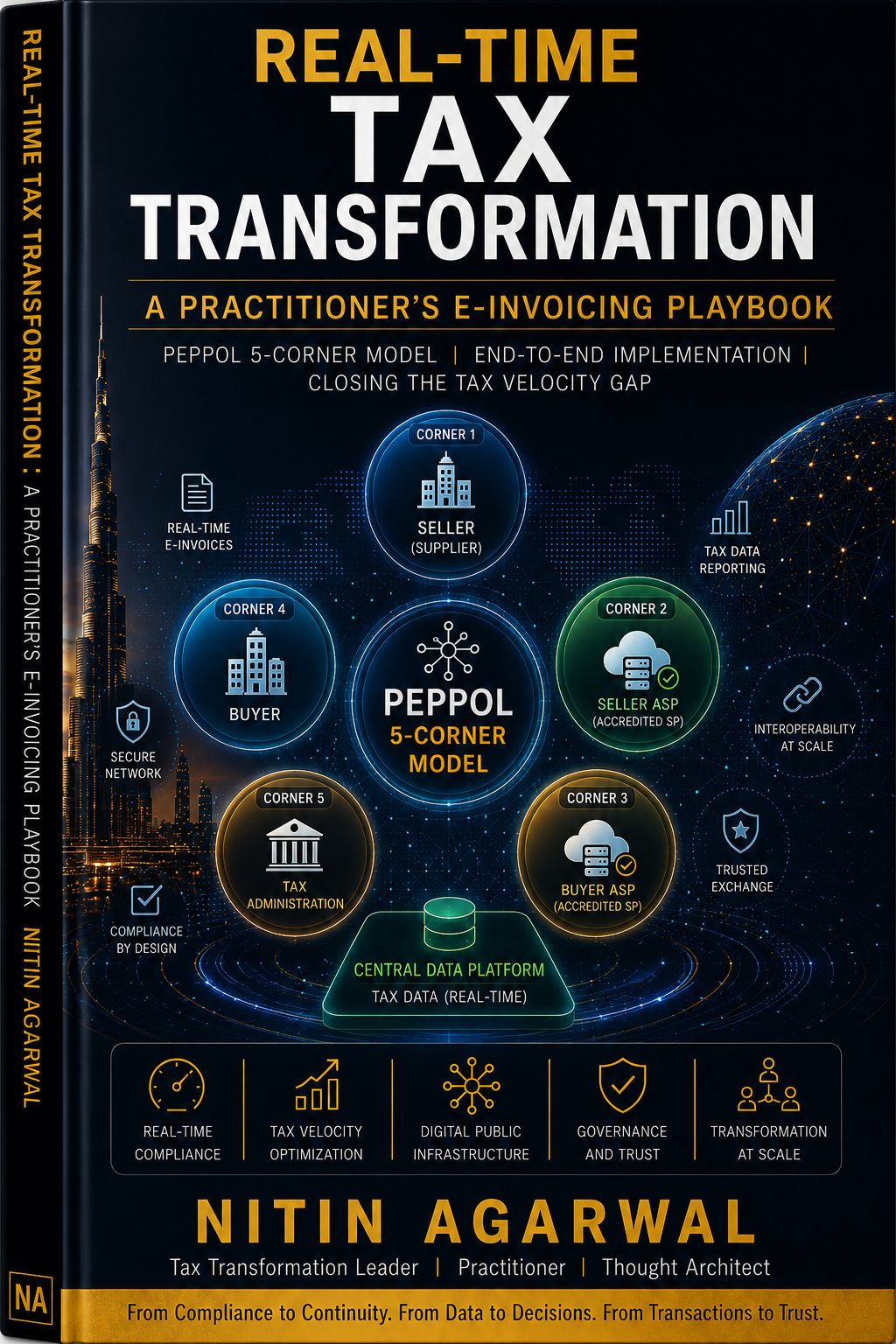
Real-Time Tax Transformation
The practitioner’s e-invoicing playbook — manuscript delivery Q3 2026. The companion volume to the practitioner programme, written for tax directors and ERP architects navigating PEPPOL-based mandates in UAE, Oman, GCC, and EU jurisdictions.
Built by a practitioner
PINT-AE Validator
Validate your UAE e-invoice against the full PINT-AE BIS v1.0.2 schematron — instantly, in your browser. No account required.
Learn more →Consulting & Advisory · Tax · Technology · Transformation · AI · Quality · Assurance & Governance
Boutique advisory at the intersection of tax law, technology, data, and operating model design. Five integrated disciplines. One practitioner. Built for enterprises where the cost of getting tax wrong is measured in audit exposure, not spreadsheet errors.
Learn more →Featured Analysis
UAE E-Invoicing Guidelines V1.1: What Changed and Why It Matters
ASP contracts, advance payments, and retention handling under the new appendices.
May 2026E-Invoicing Was Born in Indirect Tax — and Why Its Future Belongs to Total Tax Governance
Tracing the reconciliation chain from transaction to tax.
May 2026Selecting Your UAE E-Invoicing ASP? Read This First.
A practitioner’s framework before you sign.
Latest from Nitin
Cabinet Decision No. 149 of 2026: Twelve Amendments and the Case for Tax Certainty
Twelve provisions of the UAE VAT Executive Regulation change from 1 October 2026, with input tax apportionment reshaped from the first Tax year after 1 October 2027. The rate stays at 5% — what this decision buys is certainty, provision by provision.
August 2026UAE E-Invoicing Guidelines V1.1: Continuous Supply, Milestone Billing and Where Retention Goes
Scenario 5 keeps the retention calculation off the Electronic Invoice entirely, and requires a separate electronic Tax Invoice when the retention falls due.
August 2026UAE E-Invoicing Guidelines V1.1: Agent Billing and the Obligation That Stays With the Supplier
Scenario 6 lets a disclosed agent issue on a principal's behalf, and leaves the issuance responsibility with the supplier. Plus import VAT paid by an agent.